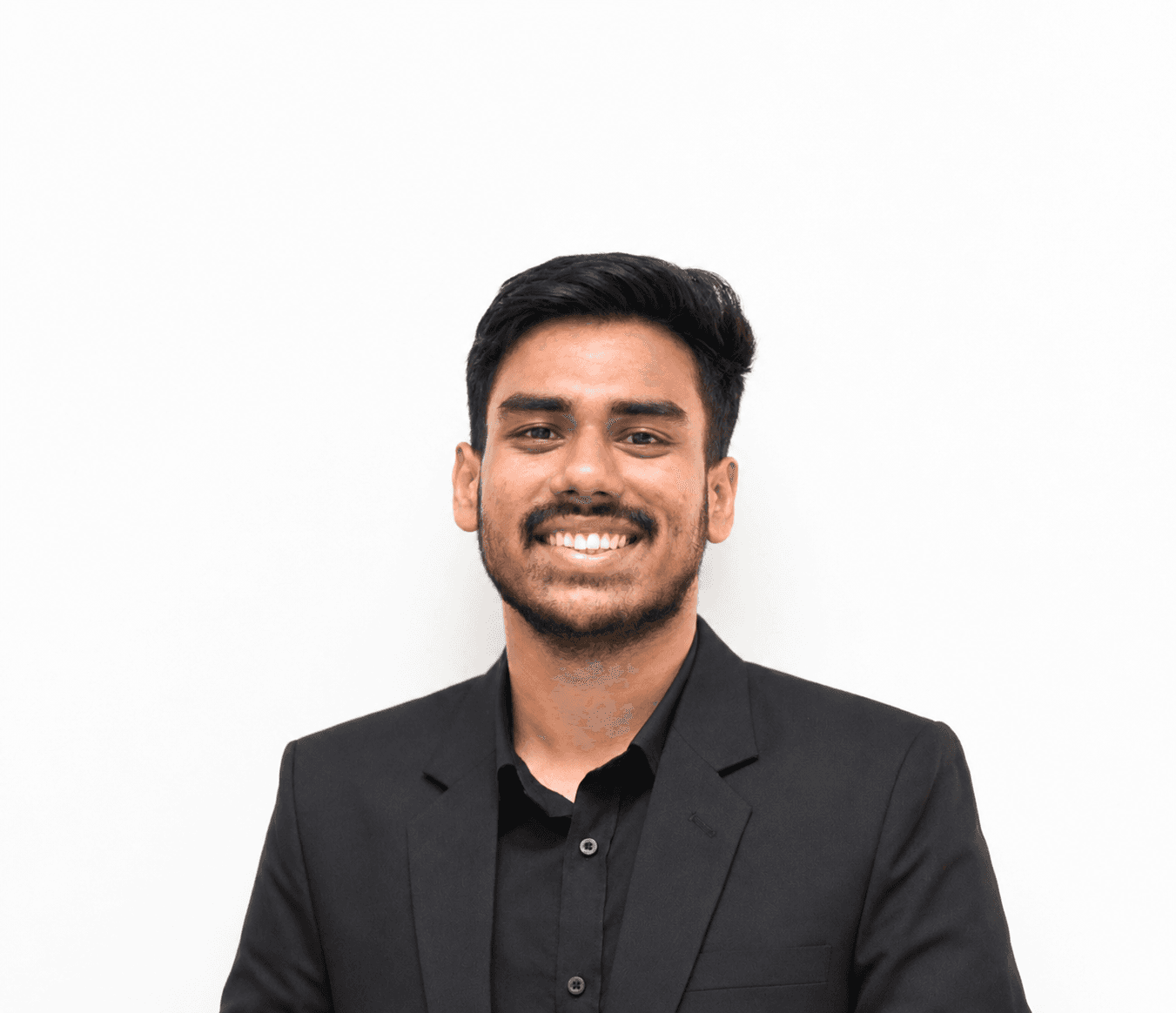
About Badar Hossain
This page is the long-form account of who Badar Hossain is and how his path led to Ravenence Limited and DeepNet Lab: the roots of his interest in technology, the engineering and research background behind his work, the reasoning behind the company he co-founded, and the principles that continue to guide it. For a shorter, media-ready summary, see the Biography page.
Who Is Badar Hossain
Badar Hossain is the Co-Founder & Chief Operating Officer (COO) of Ravenence Limited, where he leads operations, software delivery, AI automation, and digital transformation initiatives. He works as a Full-Stack Developer and AI Specialist across web applications, mobile applications, CRM systems, automation workflows, SEO, and scalable digital infrastructure. Alongside his role at Ravenence, he is a Graduate Research Assistant at DeepNet Lab, with research interests spanning artificial intelligence, machine learning, and software engineering. He is based in Sylhet, Bangladesh.
His work sits deliberately at the intersection of two things that are often treated as separate tracks — building production software for real businesses, and studying the research problems (in AI, ML, and NLP) that shape what that software will look like in a few years. That combination is the throughline of everything below.
Early Interest in Technology
Badar’s interest in technology grew out of ordinary curiosity rather than a single defining moment — the kind of interest that starts with taking software apart to understand how it works, and gradually turns into wanting to build it. Through secondary and higher secondary education, that curiosity narrowed from a general fascination with computers toward programming and problem-solving specifically: the appeal was less about the machines themselves and more about how a well-structured piece of logic could reliably solve a real problem, repeatedly, at scale.
That framing — technology as a tool for solving concrete problems reliably, not as an end in itself — is one he has carried through university, into research, and into the way Ravenence is run today.
University Journey
Badar pursued his undergraduate education at Leading University, Sylhet, graduating with a final CGPA of 3.91 out of 4.00. University was where his interest in technology turned into a discipline: coursework in algorithms, systems, and software design gave structure to what had previously been self-directed exploration, and campus life gave him his first real leadership and organizational responsibilities outside the classroom.
Beyond academics, he took on responsibilities within university student organizations, including major leadership roles within campus community and research societies — experience that shaped his approach to coordinating people and delivering on commitments long before he applied the same skills to running a company.
Computer Science & Engineering
His degree in Computer Science and Engineering gave him a grounding in the fundamentals that underpin both his commercial and research work today: data structures and algorithms, software architecture, databases, and the engineering discipline of building systems that stay reliable as they grow. That foundation is directly visible in how Ravenence approaches client work — treating software engineering as an engineering discipline first, with the same rigor applied whether the deliverable is a marketing website or a CRM automation pipeline.
CSE also introduced him to the research side of computing — machine learning, applied statistics, and the early stages of what would become his research work at DeepNet Lab.
Research Journey
Badar’s research work sits alongside, not apart from, his industry role. His authored and co-authored publications span two distinct threads: machine learning applied to healthcare risk prediction, and natural language processing applied to social computing and online harm. Both threads share a common thread: using ML/NLP methods to make sense of messy, real-world data in ways that are directly useful, rather than purely theoretical.
His authored work has been published through IEEE Xplore and Springer, and can be found in full on the Publications section, alongside citation details and links to each paper.
DeepNet Lab
Badar is a Graduate Research Assistant at DeepNet Lab, a research lab focused on artificial intelligence, machine learning, and deep learning. His work there covers applied AI and NLP research, with current interests extending into retrieval-augmented generation (RAG) and large language models (LLMs) — the same class of systems he now works to apply practically through Ravenence’s AI automation projects.
Working in a research lab alongside running a technology company gives him a somewhat unusual vantage point: he sees both where AI methods are heading in the literature, and where they actually hold up (or don’t) once they meet a real client, a real budget, and a real deadline.
Why Artificial Intelligence
Badar’s interest in AI is practical rather than purely academic. What draws him to the field is the fact that AI systems — done well — can absorb repetitive, error-prone work that would otherwise consume a team’s time, freeing people to focus on judgment calls a machine can’t make. That is the lens through which he evaluates AI automation work at Ravenence: not “can this be automated” but “should it be, and will it still be dependable in six months.”
His research interests in NLP, RAG, and LLMs follow the same logic — these are the current frontier of what AI systems can reliably do with unstructured, real-world text and knowledge, which is exactly the kind of problem business automation keeps running into.
Why Software Engineering
If AI is the “what,” software engineering is the “how it keeps working.” Badar’s emphasis on engineering discipline — clear scope, maintainable architecture, and dependable delivery — comes from a conviction that the most sophisticated AI feature is worthless if the surrounding system is fragile. A full-stack developer’s job, in his view, is to make sure the clever part of a product is also the reliable part.
Building Ravenence Limited
Ravenence Limited was built around a simple premise: growing businesses need software, automation, and digital infrastructure that actually gets delivered — not just designed. As Co-Founder & COO, Badar’s responsibility is converting strategy into delivered work: overseeing project execution, team coordination, and delivery processes across AI automation, web and mobile app builds, CRM automation, analytics, and SEO/AEO.
Running operations for a technology company, in practice, means the unglamorous work of making sure every project has a clear scope, a realistic timeline, and a team that can actually hit it — a discipline he considers inseparable from the technical work itself.
Leadership Philosophy
Badar’s approach to leadership is operational rather than performative: clarity of scope, realistic timelines, and consistent follow-through matter more to him than grand strategy decks. He treats trust as something built delivery by delivery — with clients, with collaborators, and with the teams he has led both at Ravenence and earlier in university student organizations.
Approach to Technology
He treats technology choices as engineering trade-offs, not trend-following. Whether it’s picking a stack for a client’s web application or deciding whether an AI automation workflow is worth building, the underlying questions are the same: does this solve the actual problem, will it hold up under real usage, and can the team maintain it after launch. That mindset applies equally to his full-stack development work (React, Next.js, Node.js, TypeScript, React Native) and to the automation tooling (CRM systems, workflow automation) that Ravenence builds for clients.
Vision
Badar’s stated mission is to build reliable technology solutions that help businesses scale through modern software and AI-driven systems. The emphasis on reliable is deliberate — his vision isn’t simply to bring the newest AI capability to market fastest, but to make sure that whatever Ravenence ships continues to work correctly long after the initial project is done.
Future Goals
Looking ahead, Badar’s goals center on two parallel tracks: growing Ravenence’s capacity to deliver AI automation and full-stack software for a wider range of businesses without compromising its delivery record, and deepening his research work at DeepNet Lab — particularly around applied NLP, RAG, and LLM systems — so that what he studies in research continues to directly inform what Ravenence builds in production.
Personal Values
Reliability, clarity, and follow-through recur across how Badar describes his work — in research, at Ravenence, and in the community organizations he has been part of. He values being straightforward about scope and timelines over overpromising, and treats consistent delivery as the real measure of competence, more than any single impressive-sounding claim.
Community Contributions
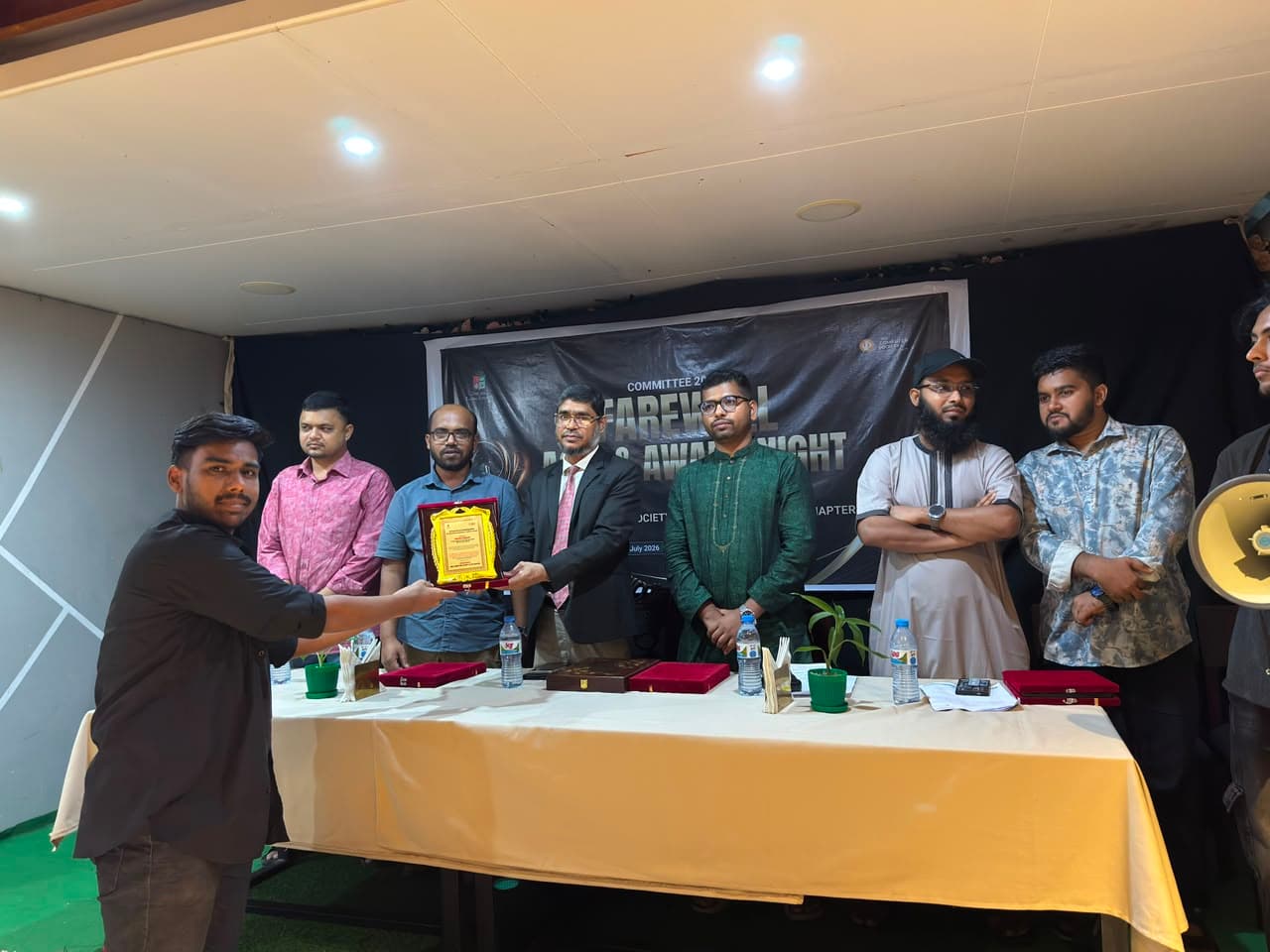
Receiving a crest of recognition
Outside his professional and research work, Badar has held leadership and volunteer roles within university community organizations, including a Secretary General position with major coordination and leadership responsibilities. He has contributed to organizing student research seminars and academic paper-writing sessions, and has volunteered with campus social service initiatives, including public health outreach such as blood donation and vaccination campaigns. Photos from several of these events are on the Media page.
Additional Personal Story
This section is reserved for more personal storytelling — specific moments, people, or experiences Badar wants to add in his own words. Currently left intentionally brief; expand here anytime.
Closing Thoughts
Badar Hossain’s work — as Co-Founder & COO of Ravenence Limited and as a Graduate Research Assistant at DeepNet Lab — is held together by one consistent idea: that good technology has to actually ship, and keep working, for it to matter. Whether that means a research paper, a client’s CRM automation, or a piece of AI tooling, the standard is the same.